





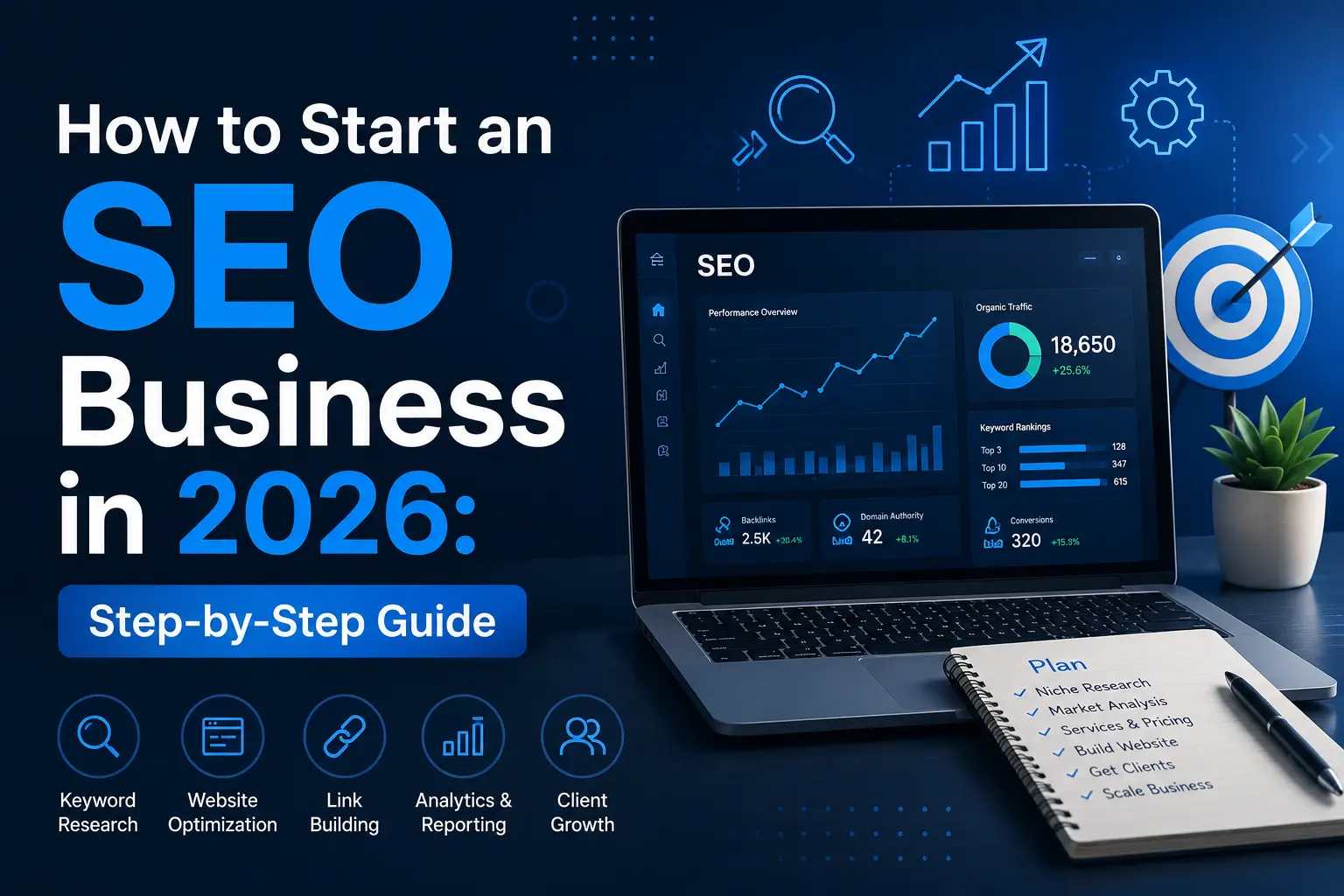
If you have ever searched for something on Google and wondered how certain websites always appear at the top, that is SEO at work. And right now, in 2026, businesses of every size are willing to pay serious money to get those top spots.
That creates a massive opportunity for you.
Starting an SEO business is one of the most accessible, low-overhead, high-income digital businesses you can launch today. You do not need a big team, a fancy office, or a large investment. You need the right skills, a clear strategy, and the willingness to take action.
This complete step-by-step guide will show you exactly how to start an SEO business in 2026 — from learning the fundamentals to landing your first client and scaling into a full agency.
What Is an SEO Business and Why Does It Matter in 2026?
An SEO business is a company or solo practice that helps other businesses rank higher on search engines like Google, Bing, and increasingly on AI-powered search tools. You provide services like keyword research, on-page optimization, technical SEO audits, link building, content strategy, and performance reporting.
The reason this matters more than ever in 2026 is simple: the global SEO services market is estimated at $83.98 billion. Every business, from local restaurants to global SaaS companies, needs organic visibility to survive in an increasingly digital-first world.
As more companies move online, they need experts who can help them rank on Google, increase traffic, and generate leads. The demand for SEO services continues to grow rapidly, with businesses of all sizes — from startups to global brands relying on search engine optimization to compete in digital markets.
The best part? You don’t need a huge investment to start. Whether you are a freelancer, marketer, or entrepreneur, you can launch an SEO business from scratch, even if you have no prior experience.
To understand how SEO fits into the broader digital landscape, read this detailed digital marketing guide for 2026, which puts the full picture into context.
Is Starting an SEO Business Profitable?
Let us be direct. Yes, an SEO business is one of the most profitable digital service businesses you can run in 2026.
Here is why:
Most SEO agencies operate on monthly retainer models. A single client paying $1,500 to $3,000 per month is common. Land five clients and you are generating $7,500 to $15,000 monthly. You and ten clients are running a six-figure business.
SEO services often operate on monthly retainers, creating stable, recurring income. You can start solo and later grow into a full SEO agency. You can work from anywhere and serve global clients.
The income ceiling is essentially unlimited. Boutique SEO agencies generate $500,000 to $2 million annually. Enterprise-level firms go well beyond that.
Step 1: Master the Core SEO Skills
Before you sell anything, you need to know your craft deeply. This is the foundation on which everything else is built.
The essential skills every SEO business owner needs to master are:
Keyword Research Understanding how to find the right keywords, the ones people actually search for, with the right intent and realistic competition, is the backbone of all SEO work. Learn to use tools like Ahrefs, SEMrush, and Google Keyword Planner with real fluency.
On-Page SEO This covers everything that happens on the page itself, title tags, meta descriptions, heading structure, internal linking, content optimization, and schema markup. Check out this complete on-page SEO checklist for 2026 to understand exactly what clients will need from you.
Technical SEO: Site speed, crawlability, Core Web Vitals, mobile-first indexing, structured data, XML sitemaps, and canonical tags all fall under technical SEO. Today’s search criteria for algorithms are more focused on technical stability, UX, and structured content.
Link Building Earning high-quality backlinks from authoritative websites remains one of the most powerful ranking factors in 2026. You need to understand outreach, digital PR, guest posting, and content-driven link acquisition.
Content Strategy In 2026, SEO is all about clarity and context. You want your content to be clear for users, search engines, and the AI systems that increasingly pull answers from your pages.
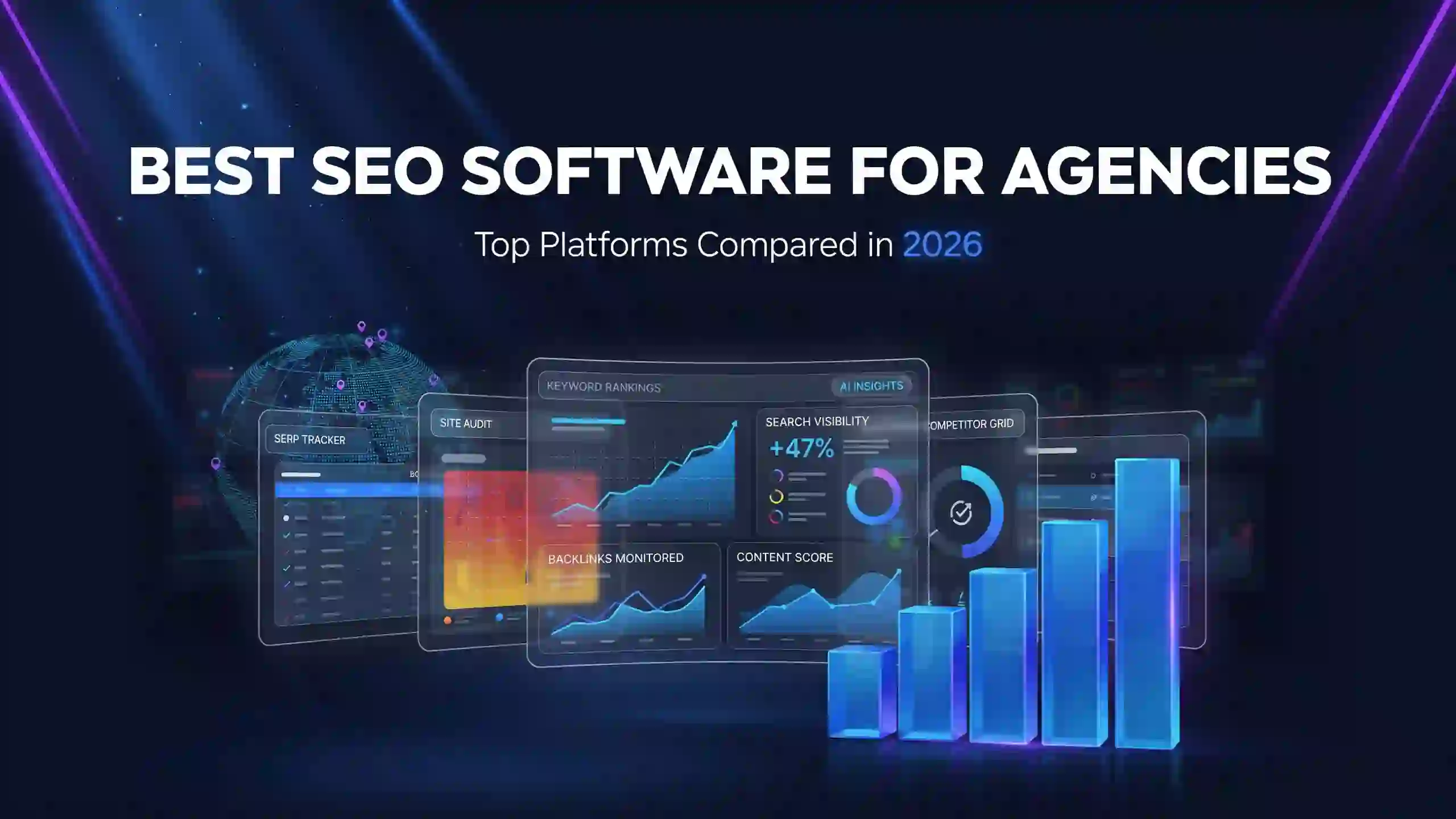
AI and SEO Tools In 2026, knowing how to use AI-powered SEO tools is no longer optional. Read this guide on the best SEO software for agencies to understand the tools shaping the industry right now.
You can build these skills through Google’s free Search Central documentation, Ahrefs Academy, SEMrush Academy, and Moz’s Beginner’s Guide to SEO. You do not need a degree. You need demonstrated expertise and results.
If you are looking to accelerate your learning with structured training, explore the advanced digital marketing and SEO courses at IDTS Digital — one of the most practical and career-focused programs available.
Step 2: Choose Your SEO Niche
One of the biggest mistakes new SEO business owners make is trying to serve everyone. That approach makes you forgettable. Specializing makes you the obvious choice.
Identifying your niche is one of the most critical strategic decisions you’ll make when launching an SEO agency. Specializing in a specific market, customer type, or service offering can provide a significant competitive advantage.
Some of the most profitable SEO niches in 2026 include:
- Local SEO for small businesses — restaurants, dentists, law firms, contractors
- E-commerce SEO — Shopify, WooCommerce, BigCommerce stores
- SaaS SEO — B2B software companies with long sales cycles
- Healthcare SEO — hospitals, clinics, medical practices
- Real estate SEO — agents, brokers, property platforms
- Legal SEO — law firms targeting high-value practice areas
- Fintech SEO — financial services with strict compliance requirements
For those operating in Pakistan and targeting local markets, this guide on local SEO for Pakistani businesses is an excellent starting point for understanding niche positioning in a high-growth regional market.
When choosing a niche, analyze your skills and interests first. Research in-demand services and look for specific SEO needs that are growing but not overrun with competition. Choose growing niches — emerging and rapidly expanding niches have hungry buyers and few experts.
Step 3: Write Your SEO Business Plan
A business without a plan is just a hobby. Your SEO agency business plan does not need to be a 50-page document, but it does need to answer the key questions that will drive every decision you make.
A business plan is essential for any growing SEO business. It’s what guides your SEO agency’s growth and trajectory, identifying where you want to go and how to get there.
Your SEO agency business plan for 2026 should include:
Executive Summary: A brief overview of what your agency does, who you serve, and what makes you different.
Services Offered List your core services — technical SEO audits, on-page optimization, link building, local SEO, content creation, and monthly reporting.
Target Market: Define your ideal client. Industry, company size, geography, budget, and pain points.
Unique Value Proposition (USP) Your USP differentiates your business from others and makes you the best choice for potential clients. It solves their problem in a way competitors can’t match. A compelling USP answers the client’s question: “Why should I hire you over other options?”
Pricing Model: Will you charge hourly, per project, or on a monthly retainer? (We cover this in detail below.)
Revenue Projections: Set realistic goals. Month one: one client. Month three: three clients. Month six: five to eight clients.
Marketing Strategy: How will you attract clients? Content marketing, LinkedIn outreach, referrals, and your own SEO rankings?
Step 4: Register Your Business and Handle the Legal Setup
Once you have your plan, make your business real.
For US-based agencies, the most common structure is an LLC (Limited Liability Company). It protects your personal assets, looks professional to clients, and keeps your taxes manageable.
Key legal setup steps:
- Choose your business structure: Sole proprietorship, LLC, or Corporation.
- Register your business name with your state.
- Obtain an EIN (Employer Identification Number) from the IRS
- Open a dedicated business bank account.
- Get a basic business contract template for client agreements.
- Set up professional invoicing — tools like Wave, FreshBooks, or QuickBooks work well.
For anyone starting in Pakistan, understanding the formal registration process is equally important. Review this guide on how to start freelancing in Pakistan in 2026, which covers the practical business setup side for digital professionals.
Step 5: Set Up Your Online Presence
Your website is your most powerful sales tool. It is your portfolio, your proof of concept, and your 24/7 salesperson.
A high-performing, SEO-friendly website is the first step to proving your expertise and attracting clients to your agency. Your website is your SEO agency’s online storefront. It should look professional, with a clean and modern style. Navigation must be simple, and it must be mobile-friendly.
Your agency website needs these pages at a minimum:
- Homepage — clear messaging about who you help and how
- Services page — detailed breakdowns of each service you offer
- About page — your story, credentials, and why you are the right choice
- Case studies / Portfolio — results you have achieved for clients
- Blog — content that demonstrates your expertise and attracts organic traffic
- Contact page — make it easy for leads to reach you.
Most importantly, rank your own website. If you can get your SEO agency site to page one for your target keywords, that is the most convincing sales pitch you will ever make. Clients see it and immediately know you deliver what you promise.
For web development options, this comparison of WordPress vs custom website building in 2026 will help you decide the right platform for your agency site.
Also read the full 2026 Google ranking guide to ensure your own site is fully optimized from day one.
Step 6: Choose the Right SEO Tools
The right tools make you faster, more accurate, and far more valuable to clients. Here are the essential tools every SEO business needs in 2026:
Keyword Research and Competitor Analysis
- Ahrefs — industry standard for backlink analysis and keyword research
- SEMrush — all-in-one platform covering SEO, PPC, and content
- Google Keyword Planner — free, reliable, and directly from the source
Technical SEO Auditing
- Screaming Frog — the most thorough site crawler available
- Google Search Console — essential and completely free
- PageSpeed Insights — for Core Web Vitals analysis
Rank Tracking
- SE Ranking — affordable and accurate for small-to-mid agencies
- Ahrefs Rank Tracker — powerful for large keyword sets
- Mangools SERPWatcher — budget-friendly option for startups
Reporting
- Looker Studio (formerly Google Data Studio) — free, customizable dashboards
- AgencyAnalytics — purpose-built for SEO agency reporting
Content and AI SEO Tools
- Surfer SEO — on-page content optimization
- Clearscope — semantic content analysis
- ChatGPT and Claude — for content ideation, drafting, and strategy
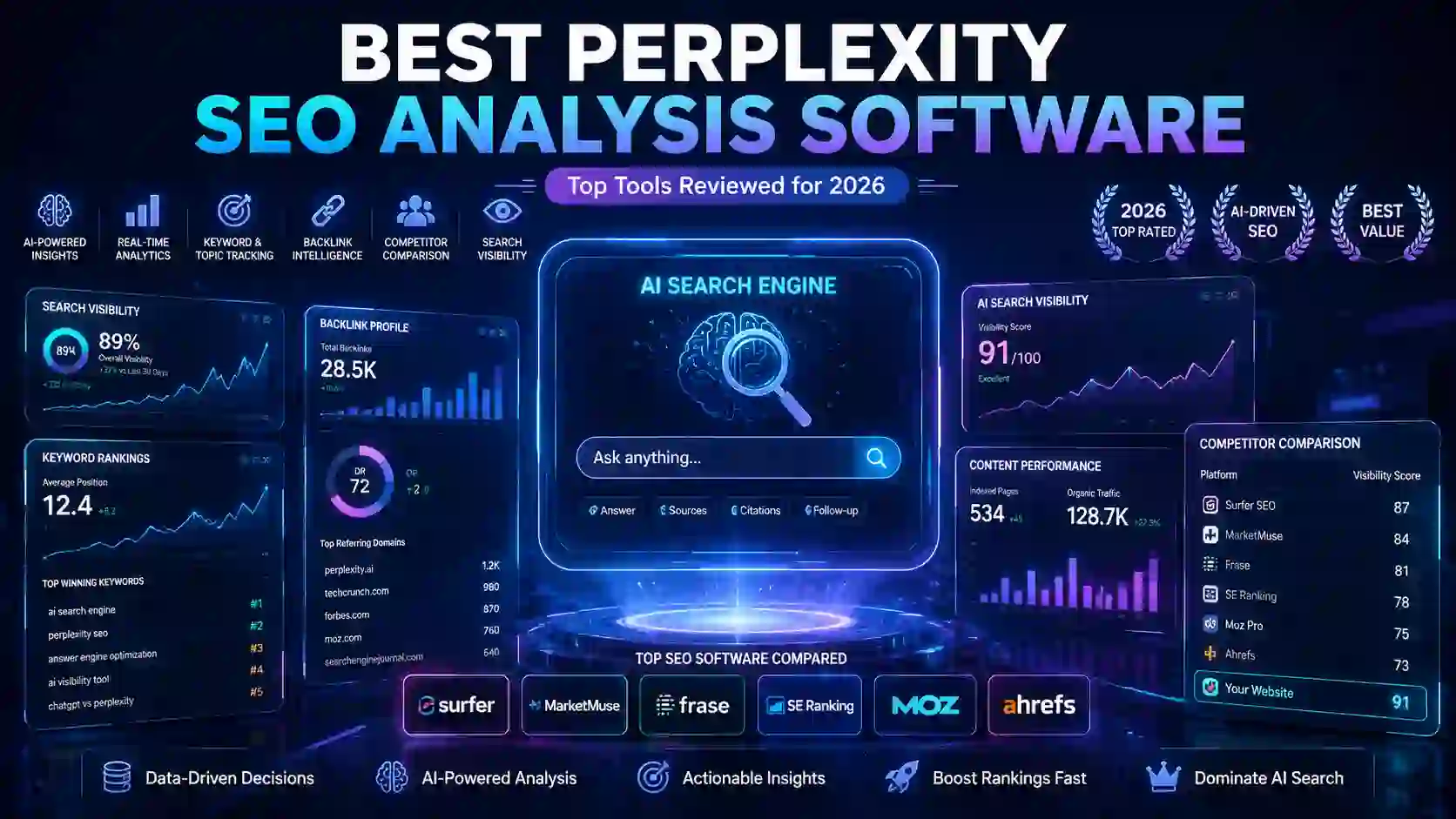
Read the best Perplexity SEO analysis software guide to stay updated on how AI-powered research tools are reshaping agency workflows in 2026.
Step 7: Build an SEO Portfolio (Even With Zero Clients)
Every new agency faces the same challenge: clients want proof of results before hiring you, but you cannot get results without clients. Here is how to break that cycle.
Option 1: Work on your own website. Build a niche blog or local business website and rank it. Document the process and the results. This becomes your first case study.
Option 2: Offer free or discounted work to local businesses. Find five local businesses with a slow-loading site or bad rankings. Send them a free video audit. Show them exactly what’s wrong and how you’d fix it. It’s the easiest way to prove your value.
Option 3: Help a nonprofit or charity. Nonprofits often have zero SEO and are happy to receive pro bono help. The results become your portfolio.
Option 4: Create before-and-after documentation. Even if you did a small project, document it thoroughly. Traffic changes, ranking improvements, and lead increases all make compelling case study material.
Step 8: Set Your SEO Pricing
Pricing is where most new agency owners undersell themselves. Here is a realistic breakdown of what SEO services command in 2026:
Monthly Retainer (Most Common)
- Small business SEO: $750 to $2,000/month
- Mid-market SEO: $2,000 to $5,000/month
- Enterprise SEO: $5,000 to $20,000+/month
One-Time Project Pricing
- SEO audit: $500 to $5,000
- Website migration SEO: $2,000 to $10,000
- Local SEO setup: $500 to $2,500
Hourly Rate
- Junior SEO consultant: $50 to $100/hour
- Mid-level SEO specialist: $100 to $175/hour
- Senior SEO strategist: $175 to $300/hour
When pricing your packages, factor in the time you spend, the value you deliver, and what the market will bear in your niche. Never compete purely on price — that race always ends at the bottom.
Step 9: Get Your First SEO Clients
Landing your first client is the most important milestone. Here are the most effective strategies for doing it in 2026:
LinkedIn Outreach: LinkedIn is the single best platform for B2B client acquisition. Optimize your profile, post content that demonstrates your expertise, and send personalized (not spammy) connection requests to decision-makers in your target niche.
Your Own SEO Rankings: Get your agency website ranking for “[city] SEO agency” or “[niche] SEO consultant.” Inbound leads from your own rankings are the highest-converting clients you will ever find.
Referrals: Tell everyone you know what you do. Offer a referral fee to people who send you clients. Your first ten clients will almost certainly come from your existing network.
Cold Email. When done right, personalized, specific, value-first cold email still works. Send a brief audit of a prospect’s website and offer one quick win for free.
Content Marketing: Write helpful SEO content on your own blog. Answer the questions your ideal clients are searching for. Over time, this builds authority and drives inbound leads automatically.
Partnerships Partner with web developers, graphic designers, and marketing consultants who do not offer SEO. They will refer clients to you in exchange for referrals back. These partnerships are underused and highly effective.
For a deeper understanding of client acquisition strategies, this guide on how to choose a digital marketing agency in Pakistan in 2026 shows you what clients look for, which is exactly what you need to deliver.
Step 10: Deliver Results and Retain Clients
Acquisition is hard. Retention is a skill. The most profitable SEO businesses are built on long-term client relationships, not a constant churn of new clients.
Here is what separates agencies that retain clients from those that do not:
Clear onboarding process. Set expectations from day one. Tell clients what you will do, when you will do it, and what they can expect to see and when.
Monthly reporting: Send clear, easy-to-understand reports that connect your work to business outcomes. Traffic is nice. Leads and revenue are what clients actually care about.
Regular communication. Do not go quiet for weeks and then send a big report. Stay in touch. Share quick wins. Alert clients to algorithm updates before they notice something has changed.
Honest expectations, SEO takes time. For most businesses, you will not see significant results until around 3–6 months of consistent, purposeful SEO efforts. More meaningful results will be seen in the 6–12-month range. Set this expectation upfront, and clients will stay. Oversell quick results, and they will leave disappointed.
Step 11: Scale Your SEO Agency
Once you have five to ten clients and a stable revenue base, it is time to scale.
Hire or outsource. You cannot do everything yourself forever. Start by outsourcing content writing and link outreach. Then bring on a junior SEO specialist. Build systems first, then build your team.
White label SEO White label partnerships allow you to sell SEO services delivered by another agency under your brand. This lets you take on more clients without immediately hiring more staff.
Systemize your processes. Document every process — audits, onboarding, reporting, outreach. Standard operating procedures let you delegate confidently and maintain quality at scale.
Add complementary services. Once your SEO delivery is stable, consider adding services your clients already need — social media strategy, Google Analytics setup and reporting, AI-powered business automation, and CRM automation are natural complements to SEO for most clients.
SEO Business in Pakistan: A Massive Opportunity in 2026
Pakistan deserves special attention here because the opportunity is genuinely extraordinary.
Pakistani SEO professionals can serve both local Pakistani businesses and international clients. Local businesses are increasingly investing in digital marketing. And international clients — particularly in the UK, USA, Canada, and Australia actively seek skilled, English-proficient, cost-competitive SEO talent from Pakistan.
Key advantages for Pakistani SEO entrepreneurs:
- Lower cost of living means you can undercut Western agency rates while maintaining healthy profit margins.
- Growing demand from Pakistani businesses adopting digital-first strategies
- Access to global clients through platforms like Fiverr and Upwork
- A young, tech-savvy population with strong English proficiency
The best IT courses in Pakistan for 2026 give you a clear picture of the skill investments that will pay off most in this market. And if you want to understand how to earn online as a freelancer from Pakistan, this guide on earning money online as a freelancer in Pakistan in 2026 covers the practical path in detail.
Why Choose IDTS Digital for SEO and Digital Marketing Training?
If you are serious about starting an SEO business in 2026, the quality of your training will determine the quality of your results. That is where IDTS Digital stands out.
IDTS Digital is one of Pakistan’s most trusted digital skills and IT training institutes, offering practical, hands-on training across SEO, digital marketing, web development, AI tools, and more. The courses are built for real-world application, not theoretical frameworks that do not translate to client work.
Here is what makes IDTS Digital the right choice for aspiring SEO business owners:
- Industry-current curriculum updated regularly to reflect 2026 SEO realities, including AI search, Core Web Vitals, and E-E-A-T.
- Hands-on project work that builds a real portfolio you can show clients
- Expert instructors with proven agency experience — not just academics
- Career support, including freelancing guidance, client acquisition strategies, and income-building roadmaps
- Comprehensive service ecosystem including SEO services, digital marketing services, web development, content writing, and AI chatbot services
Explore all advanced IT courses and services at IDTS Digital and take the step that separates people who talk about starting an SEO business from those who actually do it.
The Future of SEO Business: Trends to Watch in 2026 and Beyond
Excellent SEO strategies in 2026 are less about beating the algorithm and instead about becoming the most trustworthy and easily found source online within your area of expertise.
Here are the biggest trends shaping SEO businesses right now:
AI-Powered Search: Google’s AI Overviews and tools like Perplexity are changing how users find information. SEO agencies that optimize for AI-generated answers — not just traditional blue links — will win the most clients in 2026.
E-E-A-T Is Non-Negotiable. E-E-A-T has quickly become the most significant factor in ranking for online searches in 2026. For businesses, demonstrating E-E-A-T means showing real understanding of your industry and highlighting your involvement in it.
Voice and Visual Search Voice searches are much longer and focus on giving context to the search. Visual searches are a major indicator of how search engine technology and the internet will change in 2026.
Content Quality Over Content Volume: More content is not better. Better content is better. Agencies that deliver genuinely useful, well-researched, semantically complete content will consistently outperform those producing thin content at scale.
To stay ahead of these shifts, bookmark this complete SEO guide for 2026 and Google ranking and revisit it regularly as search continues to evolve.
Frequently Asked Questions About Starting an SEO Business in 2026
How do I start an SEO business in 2026? Start by mastering core SEO skills — keyword research, on-page SEO, technical SEO, link building, and content strategy. Then choose a niche, write a business plan, set up your website, build a portfolio with two to three case studies, and reach out to your first clients through LinkedIn, referrals, and cold email. The full process typically takes two to four months from learning to the first paying client.
Is starting an SEO business profitable? Yes. SEO agencies typically operate on monthly retainers of $750 to $5,000+ per client. With five clients on retainer, a solo operator can generate $5,000 to $15,000 per month. Scaling to a small team of three to five people can push annual revenue past $500,000. Profit margins in SEO agencies typically range from 50% to 70%.
How much does it cost to start an SEO business? The startup costs are very low compared to most businesses. Essential tools (SEMrush or Ahrefs, Screaming Frog, rank tracking) cost $200 to $400 per month. A professional website costs $500 to $2,000 to build properly. Business registration and legal setup in the USA costs $100 to $500. Total startup budget: $1,000 to $3,000 is enough to launch professionally.
Do I need a degree to start an SEO business? No. SEO is a skills-based profession. Clients care about results, not credentials. What matters is your ability to demonstrate that you can rank websites, drive traffic, and generate leads. A strong portfolio and documented case studies are worth far more than any degree.
What tools do SEO agencies use? The core toolkit for most SEO agencies includes Ahrefs or SEMrush for keyword research and backlink analysis, Screaming Frog for technical audits, Google Search Console for performance monitoring, Looker Studio for reporting, Surfer SEO for content optimization, and rank tracking tools like SE Ranking or Mangools.
Can I start an SEO business from home? Absolutely. SEO is entirely location-independent. All work is done digitally — audits, keyword research, outreach, content strategy, and client communication. Many successful six and seven-figure SEO agencies are run entirely from home offices with distributed remote teams.
Conclusion: Your SEO Business Starts Here
Starting an SEO business in 2026 is one of the best decisions you can make as a digital professional. The market is growing, the demand is real, and the barriers to entry are lower than almost any other service business.
You do not need a massive budget. You do not need years of corporate experience. You need the right skills, a clear niche, a professional presence, and the persistence to keep learning and delivering.
The steps are simple, even if the execution takes work: learn, specialize, build your website, create your portfolio, land your first client, deliver results, and scale from there.
If you are ready to fast-track your journey and build a real foundation under your SEO business, book your seat in the Advanced Digital Marketing Course at IDTS Digital today. Real training. Real skills. Real results.
The businesses that will dominate search in 2027 are being built right now. Make sure yours is one of them.
Explore more resources from IDTS Digital: