





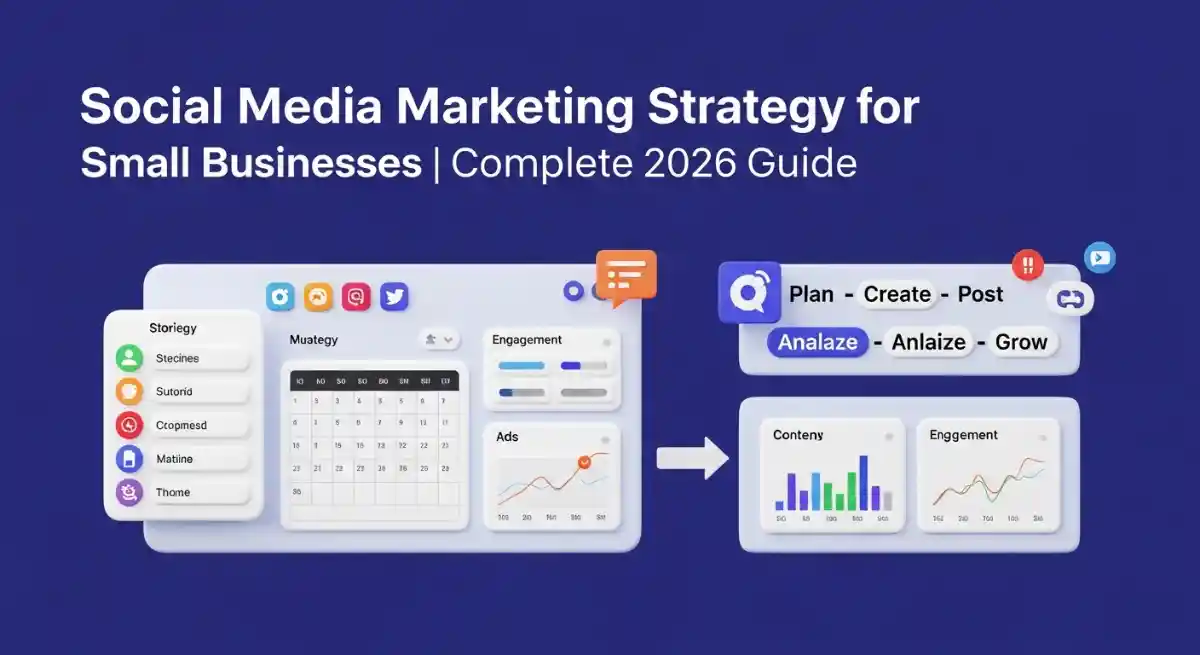
What Is Social Media Marketing Strategy for Small Businesses?
If you run a small business and you are not on social media yet, you are leaving serious money on the table. A social media marketing strategy for small businesses is a clear, structured plan that defines what you will post, where you will post it, who you are talking to, and what results you expect to achieve.
It is not just about posting random photos or running occasional promotions. It is about building a consistent brand presence, connecting with your target audience, generating leads, and ultimately growing your sales — all through platforms like Facebook, Instagram, TikTok, LinkedIn, YouTube, and WhatsApp.
In Pakistan alone, over 47 million people are active social media users as of 2026. Whether you are a small business owner in Islamabad, Karachi, Lahore, or Rawalpindi, social media gives you direct access to your ideal customers without spending a fortune.
This complete pillar guide will walk you through everything you need to know about social media marketing strategy and optimization — from setting goals to choosing platforms, creating content, running ads, and measuring results.
Why Social Media Marketing Matters for Small Businesses in Pakistan
Small businesses often operate with tight budgets. Traditional marketing like TV ads, billboards, or newspaper placements is expensive and hard to measure. Social media changes that completely.
Here is why small business social media marketing is no longer optional:
- Over 4.9 billion people worldwide use social media actively in 2026
- 78% of consumers say they discover new brands through social media
- Businesses that maintain active social profiles see up to 3x more leads than those that do not
- Organic social media reach is free, making it ideal for affordable social media marketing for small businesses
- Paid social ads on Facebook and Instagram can start from as little as PKR 500 per day
For local businesses in Pakistan, social media is the most cost-effective digital marketing strategy for small businesses available right now. It levels the playing field, allowing a small boutique in Lahore to compete with bigger brands by simply being more authentic, consistent, and engaging online.
Step-by-Step Social Media Marketing Strategy for Small Business
Step 1: Define Your Goals Clearly
Before you post a single thing, you need to know what you want to achieve. Vague goals like “get more followers” do not lead anywhere. Set SMART goals that are Specific, Measurable, Achievable, Relevant, and Time-bound.
Common goals for small businesses include:
- Increase brand awareness on social media by 40% in 3 months
- Generate 50 qualified leads per month through social media
- Drive 500 website visitors monthly from Instagram alone
- Achieve a 5% social media conversion rate on promotional posts
- Grow a WhatsApp customer list of 1000 contacts in 6 months
Your goals will shape every decision you make going forward — from platform selection to content types to your social media budget planning.
Step 2: Know Your Target Audience Deeply
This is where most small businesses make their biggest mistake. They create content for everyone and end up reaching no one.
Effective audience targeting on social media means knowing:
- Age, gender, and location of your ideal customer
- Their interests, pain points, and buying habits
- What platforms they use and when they are most active
- What type of content they engage with most (video, images, stories, reels)
For example, if you are running a clothing brand in Karachi targeting women aged 18–35, Instagram and TikTok will deliver far better results than LinkedIn. Whereas a B2B services company in Islamabad will find better traction on LinkedIn and Facebook Groups.
Use social media analytics and insights tools to validate your assumptions with real data.
Step 3: Choose the Right Social Media Platforms
Not every platform suits every business. Spreading yourself too thin is a common mistake in social media management for small businesses. It is better to master two platforms than to be mediocre on six.
Here is a quick platform guide:
Facebook — Best for local businesses, community building, and paid advertising. Facebook Ads Manager offers incredibly detailed targeting, making it one of the most powerful tools for social media advertising for small businesses.
Instagram — Perfect for visual brands like fashion, food, beauty, interior design, and lifestyle. Reels and Stories drive massive organic reach in 2026.
TikTok — The fastest-growing platform globally and in Pakistan. Ideal for businesses targeting younger audiences. TikTok marketing for small businesses is exploding right now with organic reach still very high.
LinkedIn — Best for B2B companies, consultants, recruiters, coaches, and professional service providers. A solid LinkedIn strategy for small businesses builds authority and trust fast.
YouTube — The second largest search engine in the world. YouTube marketing strategy for small business works brilliantly for tutorials, product reviews, and educational content that ranks on Google.
WhatsApp — Underrated but incredibly effective in Pakistan. WhatsApp marketing for small businesses allows direct communication, broadcast messages, and customer service in a platform Pakistanis already use daily.
Pinterest — Great for e-commerce, home décor, fashion, food, and travel businesses targeting female audiences.
Step 4: Build a Content Strategy That Actually Works
Content is the engine of your entire social media content strategy. Without consistent, valuable content, your strategy simply will not work.
A solid social media marketing plan for small business includes these content pillars:
- Educational content — Tips, how-tos, tutorials that solve problems your audience faces
- Promotional content — Product features, offers, launches (keep this at no more than 20% of your total posts)
- Engaging content — Polls, questions, behind-the-scenes, challenges that encourage interaction
- Social proof content — Customer testimonials, before and after results, reviews, and user generated content
- Storytelling content — Share your brand journey, team moments, values, and mission
The key to powerful social media storytelling is emotion. People do not buy products. They buy feelings, transformations, and identities. Your content should reflect what your brand stands for beyond just selling.
Step 5: Create a Content Calendar and Posting Schedule
Consistency beats frequency every single time. It is better to post three times a week consistently than seven times one week and nothing for two weeks.
A content calendar for small business helps you:
- Plan content in advance and avoid last-minute scrambling
- Maintain a consistent brand voice and visual identity
- Balance different content types throughout the week
- Align posts with important events, holidays, and product launches
How often should a small business post on social media?
- Facebook: 3–5 times per week
- Instagram Feed: 4–5 times per week + daily Stories
- TikTok: 1–2 times daily for best organic reach
- LinkedIn: 3–4 times per week
- YouTube: 1–2 videos per week
Use tools like Buffer, Hootsuite, or Later to schedule your posts in advance. This saves you hours every week and keeps your social media posting schedule running like clockwork even when you are busy running your business.
Step 6: Optimize Your Profiles for Maximum Visibility
Your social media profile is your digital storefront. Before you drive any traffic, make sure your profiles are fully optimized.
Profile optimization checklist:
- Use a high-quality logo or professional headshot as your profile photo
- Write a keyword-rich bio that clearly explains what you do and who you serve
- Add your website link, location, and contact details
- Use a consistent brand color palette and visual style across all platforms
- Set up your Instagram Business Account and Meta Business Suite properly
- Enable the LinkedIn Company Page if you are doing B2B marketing
- Connect your Facebook Ads Manager account for paid campaigns
This is basic social media optimization that most small businesses skip — and they pay for it with low visibility.
Step 7: Run Paid Social Media Advertising
Organic reach alone will only take you so far. To scale faster, paid social media advertising is essential.
Facebook and Instagram ads are among the most cost-effective advertising tools available to small businesses globally. With proper social media targeting and segmentation, you can reach people based on age, location, interests, behaviors, job titles, and even purchase intent.
Social media advertising tips for small businesses:
- Start with a small daily budget of PKR 500–1000 to test your ads
- Always test at least 2–3 different ad creatives before scaling
- Use retargeting to reach people who visited your website but did not convert
- Video ads consistently outperform image ads in 2026
- Use Facebook Ads Manager to track cost per lead, reach, and conversions
If you want expert help with this, explore professional Social Media Marketing Services at IDTS Digital where the team handles everything from strategy to execution.
Step 8: Use Hashtag Strategy to Expand Your Reach
Hashtags are still relevant in 2026 — especially on Instagram, TikTok, LinkedIn, and Twitter/X.
A strong hashtag strategy for small business includes:
- 3–5 highly popular broad hashtags (1M+ posts)
- 5–8 medium-competition niche hashtags (100K–1M posts)
- 3–5 low-competition specific hashtags (under 100K posts)
- 1–2 branded hashtags unique to your business
Research hashtags your ideal customers actually follow, not just ones that seem popular. On Instagram, using 10–15 targeted hashtags performs better than stuffing 30 random ones.
Step 9: Engage With Your Community
Posting content is only half the job. The other half is community management strategy — actively engaging with your audience.
This means:
- Replying to every comment and DM within 24 hours
- Asking questions in your captions to encourage conversation
- Engaging with your followers’ content too (not just waiting for them to come to you)
- Joining relevant Facebook Groups and LinkedIn communities in your niche
- Running polls, quizzes, and interactive stories to boost customer engagement on social media
Algorithms on every platform reward engagement. The more people interact with your content, the more it gets shown to new users. This is how small businesses grow organic social media reach without spending a penny on ads.
Step 10: Measure, Analyze, and Optimize
You cannot improve what you do not measure. Every successful social media marketing strategy and optimization process includes regular performance reviews.
Key social media KPIs for small businesses to track:
- Reach and impressions
- Engagement rate (likes, comments, shares, saves)
- Follower growth rate
- Website clicks from social media
- Lead generation numbers
- Social media conversion rate
- Cost per lead (for paid ads)
- Video views and watch time
Use built-in analytics tools like Instagram Insights, Facebook Analytics, and LinkedIn Page Analytics. For more advanced tracking, tools like Sprout Social, Hootsuite Analytics, or Google Analytics 4 give you deeper insights.
Want to master Google Analytics for your business? Read this detailed guide on Google Analytics 4 for Beginners at IDTS Digital to understand exactly how to track your social media traffic and conversions.
Best Social Media Marketing Tools for Small Businesses in 2026
The right tools make your social media marketing faster, smarter, and more consistent. Here are the top tools every small business should know:
Content Creation:
- Canva — Drag and drop design tool perfect for creating professional posts, stories, and reels without any design skills. Read Canva vs Photoshop for Small Business to decide which one is right for you.
Scheduling & Management:
- Buffer — Simple and affordable scheduling tool ideal for small teams
- Hootsuite — More advanced option with analytics and team collaboration features
- Later — Best for visual content planning on Instagram
Analytics:
- Sprout Social — Comprehensive analytics, reporting, and engagement management
- Meta Business Suite — Free built-in tool for Facebook and Instagram performance tracking
AI Tools:
- ChatGPT — Use AI to generate caption ideas, content plans, and ad copy in minutes. Explore how ChatGPT Can Save Your Business Hours every week with intelligent automation.
Advertising:
- Facebook Ads Manager — The most powerful paid social platform for targeting Pakistani consumers
- TikTok for Business — Growing rapidly with lower ad costs than Meta right now
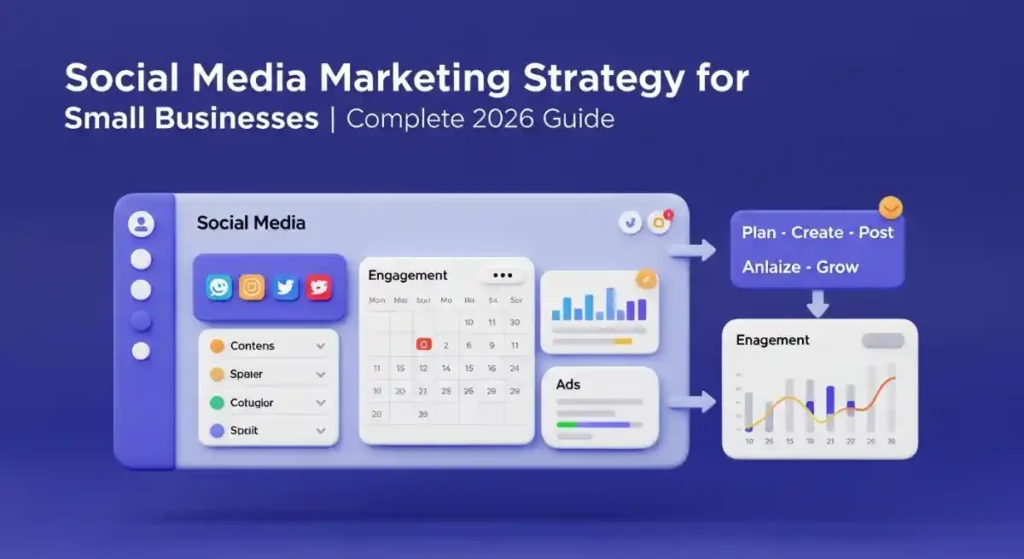
Social Media Marketing for Small Businesses in Pakistan
Pakistan’s digital landscape is evolving rapidly. With increasing smartphone penetration, expanding internet access, and a young population hungry for digital content, the opportunity for small businesses is enormous.
Key facts about social media in Pakistan (2026):
- Pakistan has over 47 million active social media users
- Facebook remains the most used platform, followed by YouTube and TikTok
- Instagram is growing rapidly among urban youth aged 18–34
- WhatsApp has near-universal adoption for both personal and business communication
- TikTok has over 30 million users in Pakistan and is a goldmine for small businesses
Social Media Marketing in Islamabad
For businesses in the capital, social media marketing in Islamabad focuses heavily on government, professional services, education, and lifestyle brands. LinkedIn performs exceptionally well here for B2B companies and consultants.
Social Media Marketing in Karachi
Karachi is Pakistan’s commercial hub. Social media marketing in Karachi is highly competitive but incredibly rewarding. Fashion, food, e-commerce, and tech startups dominate Instagram and TikTok in this market.
Social Media Marketing in Lahore
Lahore has a vibrant creative and entrepreneurial scene. Social media marketing in Lahore works brilliantly for artisan brands, fashion designers, restaurants, and real estate businesses using Instagram’s visual storytelling tools.
Social Media Marketing in Rawalpindi
As a twin city to Islamabad, social media marketing in Rawalpindi benefits from the same professional demographic. Businesses here often succeed through local community groups on Facebook and targeted WhatsApp marketing campaigns.
Social Media Marketing Course in Pakistan
If you want to learn these skills professionally, enrolling in a structured social media marketing course is the smartest investment you can make.
A quality social media marketing course in Pakistan covers:
- Social media strategy and planning
- Content creation and visual design
- Facebook and Instagram Ads
- TikTok marketing and short-form video
- Analytics and performance tracking
- Influencer and affiliate marketing
- Social media automation and AI tools
Whether you are in Islamabad, Karachi, Lahore, or Rawalpindi, IDTS Digital offers one of the most comprehensive digital education programs available. Explore the Best Digital Marketing Course in Pakistan at IDTS Digital and start building skills that are in high demand right now.
Influencer Marketing for Small Businesses
Influencer marketing for small businesses does not require hiring celebrities. In fact, micro-influencers with 5,000–50,000 followers often deliver far better results because their audiences are highly engaged and trust their recommendations deeply.
For Pakistani small businesses, micro influencer marketing in Pakistan is both affordable and effective. A single well-chosen influencer post can drive hundreds of inquiries in 24 hours.
Tips for working with influencers:
- Look for influencers whose audience matches your target customer profile
- Prioritize engagement rate over follower count
- Give them creative freedom — scripted content rarely performs well
- Track results using unique discount codes or UTM links
- Build long-term relationships rather than one-off campaigns
Social Commerce: Selling Directly Through Social Media
Social commerce is one of the biggest shifts in digital marketing in 2026. You no longer need to drive customers to a website — you can sell directly through Instagram Shops, Facebook Marketplace, and TikTok Shop.
For Pakistani e-commerce businesses, this is a game-changer. Pair this with a strong Shopify or WooCommerce store and you have a complete sales ecosystem. Read the detailed comparison of Shopify vs WooCommerce to decide which platform suits your business model.
Common Social Media Marketing Mistakes Small Businesses Make
Knowing what to avoid is just as important as knowing what to do:
- Posting without a clear strategy or goal
- Ignoring comments and messages from followers
- Using only promotional content with no value-based posts
- Inconsistent posting that breaks audience trust
- Copying competitor content instead of building an original brand voice
- Not tracking metrics or analyzing performance
- Using the same content format across all platforms without adaptation
- Neglecting video content, which now dominates every major algorithm
The Role of SEO in Your Social Media Strategy
Social media and SEO are not separate silos — they work together powerfully. Social signals, branded searches, and profile links all contribute to your overall digital authority.
If you want to dominate Google search alongside your social media growth, make sure you understand the foundations of SEO in 2026 with this Google Ranking Guide from IDTS Digital. Combining SEO with a strong social presence creates a compound growth effect that is very hard for competitors to beat.
Similarly, if you are running a local business, Local SEO for Small Business is an essential complement to your social media efforts, ensuring you appear in Google searches when nearby customers look for your products or services.
Why Choose IDTS Digital for Social Media Marketing?
IDTS Digital is one of Pakistan’s most trusted digital marketing agencies and training institutes. Whether you need professional social media management services or want to learn the skills yourself, IDTS Digital delivers real results.
What IDTS Digital offers:
- Complete Digital Marketing Services including social media strategy, content creation, paid ads management, and performance reporting
- Professional Content Writing and Blogging Services to keep your brand voice consistent across platforms
- Expert Graphic Designing Services for eye-catching social media visuals
- Advanced AI Chatbot Services to automate customer engagement on social media 24/7
- Industry-leading digital marketing courses with real-world projects and certification
You can also explore the full range of IDTS Digital Services to find exactly what your business needs right now.
Frequently Asked Questions (FAQs)
What is a social media marketing strategy for small businesses? A social media marketing strategy for small businesses is a documented plan that outlines your goals, target audience, platform choices, content approach, posting frequency, and measurement methods. It gives your social media efforts direction and ensures every action contributes to your business growth.
What is the best social media platform for small businesses in Pakistan? Facebook is the most widely used platform in Pakistan and offers the most advanced paid advertising tools. However, Instagram works best for visual brands, TikTok is fastest growing for reaching younger audiences, and WhatsApp is the most effective for direct customer communication and retention.
How much does social media marketing cost for small businesses? Organic social media marketing is essentially free — it only costs your time. Paid social media advertising on Facebook and Instagram can start from PKR 500 per day. Professional social media management services in Pakistan typically range from PKR 15,000 to PKR 80,000 per month depending on the scope of work.
How often should a small business post on social media? Consistency matters more than volume. Aim for at least 3–5 posts per week on Facebook and Instagram, 1–2 daily on TikTok, 3–4 weekly on LinkedIn, and 1–2 videos per week on YouTube. Use a content calendar and scheduling tools to maintain consistency without burning out.
Can small businesses do social media marketing for free? Yes, absolutely. Organic social media marketing costs nothing except time. Creating valuable content, engaging with your community, using hashtags strategically, and growing your audience through consistency are all completely free. Paid advertising becomes important when you want to scale faster or reach beyond your existing audience.
How long does it take to see results from social media marketing? Organic growth typically takes 3–6 months of consistent effort before you see meaningful traction. Paid advertising can generate results within days. The key is consistency — businesses that post regularly, engage actively, and refine their strategy based on data will always see results faster.
What is a social media content calendar? A social media content calendar is a planning tool that maps out what content you will post, on which platform, and on what date and time. It helps you stay consistent, maintain content variety, align posts with product launches or seasonal events, and avoid the last-minute scramble of figuring out what to post.
Conclusion: Start Building Your Social Media Strategy Today
A powerful social media marketing strategy for small businesses is not a luxury — it is a necessity in 2026. Whether you are just starting out or looking to level up your existing presence, the steps and principles in this guide give you everything you need to build a strategy that actually works.
The businesses that win on social media are not always the ones with the biggest budgets. They are the ones with the clearest strategy, the most authentic content, and the most consistent presence over time.
If you are serious about growing your business through digital channels, there has never been a better time to invest in the right knowledge and support.
📌 Ready to take the next step?
Book a seat in the Advanced Digital Marketing Course offered by IDTS Digital and learn social media marketing, SEO, paid ads, content strategy, and more — taught by real practitioners with real results.
Or if you prefer to have experts handle it for you, explore the complete range of Digital Marketing Services at IDTS Digital and let the team build and manage your social media presence while you focus on running your business.
Your audience is already on social media. The only question is — are you showing up for them?
For more insights on growing your business online, explore the IDTS Digital Blog — packed with actionable guides on SEO, digital marketing, web development, freelancing, and more.
1 Comment
[…] reading: Social Media Strategy for Small Business | Digital Marketing Guide Pakistan 2026 | YouTube Automation […]